Thursday, April 24, 2025

Living In the Age of AI

Seeing the second half of In the Age of AI was both enlightening and slightly alarming. The documentary shows  the two-sided complexity of artificial intelligence —extreme potential and equally extreme risks. Most striking to me was the fact that AI is no longer science fiction anymore. It's here, it's powerful, and it's reshaping everything — from the global economy to the structure of our daily lives.


One of the insights was the way the labor force is being affected by AI. Automation and algorithms are putting people out of work in ways that many industries cannot compete with, especially in manufacturing and delivery. It's going at a pace that will leave entire communities vulnerable, especially those without education or retraining in digital abilities. It made me have a terrifying thought: are we truly prepared for an AI economy?

But in return, yes, AI has some amazing pluses too. Medical diagnosis, adaptive learning, modeling global warming — the potential to solve some of humanity's most challenging quandaries is available. But only if we make the right decisions about how we use it.

Privacy was the second pervasive theme. The amount of information that AI digests must occur is staggering, and that involves normalization of government and corporate spying. I was most disturbed by the model of China's surveillance apparatus and what implications it would have if replicated as an international export model. It made me revisit what we surrender when convenience outweighs privacy.

National security and identity theft are also among the issues. AI technology in the wrong hands can create deepfakes, spread disinformation, or launch cyberattacks. That needs international cooperation and regulation but right now, it looks like the technology is moving faster than the laws can.

Overall, the documentary reminded me of not just what AI can do, but what it should do and who gets to decide that.

Wednesday, March 12, 2025

EOTO: Total Information Awareness (TIA)


Total Information Awareness (TIA) is a theory of gathering and analyzing huge amounts of data from various sources in an attempt to predict future actions, discover potential dangers, and preserve national security. Initiated by the U.S. government in the early 2000s, the project aimed to create a centralized database that could identify patterns of behavior that may culminate in criminal or terroristic actions. By consolidating information from various industries, such as communications, travel, financial transactions, and more, TIA sought to identify threats prior to their occurrence, thus representing a pioneering effort in preventing public safety threats.

The concept was first developed within the U.S. Department of Defense, specifically by the Defense Advanced Research Projects Agency (DARPA), which had been tasked with developing new technologies for national security. The initial objective was to locate terrorist attacks in advance of when they occurred using large data sets to analyze all types of data, from communications to banking records and travel behavior. However, the program had extensive public condemnation by privacy advocates and civil liberties groups, who worried that the program was a power grab on the part of government and encroached upon citizens' rights. Therefore, TIA was officially disbanded in 2003. Despite its disbandment, the core idea of TIA has influenced modern-day surveillance activities, with the same methods still employed today by other government agencies and private enterprises.

Key Features of TIA:

1. Data Integration:

TIA was the compilation into vast quantities of data of records from disparate sectors, ranging from financial activities to email contact information, online web-surfing history, cell phone calling details, and physical movement observation (through GPS or CCTV surveillance).  

The hope was that a rich database profile of an individual or of categories of people based on correlation and patterns could detect potential risks. By connecting large volumes of data, TIA envisioned linking the dots between seemingly unconnected activity, creating a holistic picture of an individual's actions, memberships, or objectives. 

2. Surveillance:

Surveillance was the core of TIA. The program envisioned monitoring public and private behavior, including online behavior, social interactions, communications, and travel. Using technologies like satellite surveillance, facial recognition, data-mining software, and social network monitoring tools, TIA set out to create an unprecedented level of control over the lives of citizens. With the development of surveillance technology, boundaries between public and private life were eroded.

3. Predictive Analytics:

Predictive analytics was a central part of the TIA program. In theory, this would provide advance warning of terrorist activity, crime, or even financial fraud. Although the prospect of preventing harm before it happens is appealing, predictive analytics also carries severe risks. False alarms where innocent individuals are targeted or pointed to due to mispredictions could lead to the violation of civil liberties and erosion of public confidence in security systems. 

Societal Impact

The impact of TIA's surveillance on the different segments of society is significant. The rich will most probably be able to manage their data more effectively, given their access to resources and understanding of how their data are used. The poor can be more vulnerable to unneeded surveillance because they won't have the tools and know-how to preserve privacy.

The minority, particularly the marginalized groups, may be victimized by disproportionate targeting, amplifying existing social disparities.

This is even more concerning because predictive models have a tendency to reinforce prejudices, leading to systemic discrimination.

Youth, on the other hand, are digital natives and therefore may be more open to TIA but are also softer targets for exploitation as they are technology-savvy and vulnerable to data exploitation. The elder populations, being less familiar with working around the digital realm, could be more susceptible to watchful eye and misrepresentation threats. 

Diffusion of Theory


A really good example of innovation that can be explained by Diffusion Theory is social media, specifically Facebook, Twitter, and Instagram. Diffusion Theory, which explains how, why, and at what rate new ideas and technology spread, and offers an explanation of why social media was adopted so quickly and has become so widespread in modern society.

Social media sites gained traction as they enable people to interact with one another in new ways, not only building a sense of community but also having the ability to share news, photos, and thoughts in the moment. Younger, more technologically adept users were usually the first to adopt, drawn in by the novelty and simplicity of use of the sites. To them, the technology was a new way of communicating that was exciting and empowering. They were keen to pass on the news, inviting contacts and friends to join up, which contributes to a network effect.

Not everybody was an early adopter. There were late adopters who perhaps did not recognize the importance of it, or were guarded regarding time and emotional investment. Others might have been concerned about privacy issues or social media assisting in the generation of a sense of isolation or anxiety. And, with every emerging development, there are always non-users, either because they simply don't see the value or because they have personal or philosophical objections to its use.

As for the drawbacks of social media, there are certainly many. It can lead to privacy problems, addiction, and spread of misinformation. There is also potential for negative psychological effects, such as anxiety, depression, and low self-esteem, especially for younger people. These negative effects are what personally prompted me to opt out of using Facebook, Twitter, and Instagram.

On one hand, social media can offer benefits such as staying connected with friends and family,
networking opportunities, and access to information. For some people, the benefits of social media outweigh the negatives, such as staying connected with friends, networking, and accessing information. I use social media because these advantages align with my needs. However, I do understand that there are  the potential downsides, like privacy concerns or the risk of becoming overwhelmed by information overload. For me, the benefits generally outweigh the costs, but I remain mindful of how I use it.

Antiwar


In today's global landscape, the United States conducts several military missions around the world. Exploring platforms such as Antiwar.com and The American Conservative uncovers a diverse range of opinions that are frequently overlooked in mainstream media. These publications offer detailed analysis and critiques of US foreign policy, emphasizing the intricacies and implications of military actions.

Antiwar.com, for example, provides a plethora of information, including news, perspectives, and audio programs, all aimed at promoting a non-interventionist position. The program highlights the need to realize the human and political consequences of violence. Similarly, The American Conservative, launched in 2002, publishes writings that challenge dominant narratives and advocate for a realism and restraint-based foreign policy. The periodical was noted as the only conservative magazine in the early 2000s that opposed the Iraq War, providing critiques of neoconservative agendas

The perspectives offered by these websites are likely to be different from those offered in the mainstream media, which can be influenced by a variety of factors including political affiliations, economic interests, and cultural inclinations. Mainstream media can emphasize sensationalized reports or endorse prevailing government narratives, perhaps overlooking thorough criticisms of military interventions. This divergence can lead to a limited public understanding of the complexities of U.S. military interventions.

The necessity of searching elsewhere for sites like Antiwar.com and The American Conservative raises


interesting questions about diversity and representation in the media. It is an indication that maybe mainstream media is not reflective of all the available opinions and analysis out there, particularly the ones that run counter to mainstream narratives. The disparity between this and mainstream media underscores the merit of exploring various sources of perspectives to gain a complete understanding of U.S. foreign policy and its global consequences.

In short, visiting websites that offer alternative perspectives on U.S. military intervention enriches our knowledge of international relations and the extremely complicated war effects. The recognition of the limitations of the mainstream media encourages a more interactive, informed, and critical news and analysis consumption mode, resulting in a better-informed citizenry able to engage with complex geopolitical realities

EOTO Reaction: The Ball Point Pen

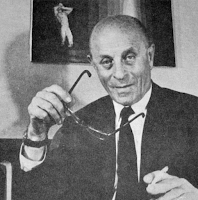
 One presentation that I was interested in was about the ball point pen. The student obviously began with a the history of the ballpoint pen, which was originally patented by John J. Loud in 1888. His patent never took off due to the fact that the pen would not distribute ink evenly. The student then says that others discovered the ball point pen in 1938. It was discovered by Hungarian-Argentinean journalist Laszlo Biro.  I had not known that skip and spill fountain pens were the most common writing instrument prior to the creation of the ballpoint pen.  Biro's invention of putting a small ball bearing at the end to drop ink reliably and precisely was revolutionary.

The impact that the ballpoint pen left was actually what amazed me the most. Of course I know how beneficial pens are to society, but seeing how the creation of what we all see as a simple item, truly impacted the world left me amazed. The speaker discussed how it quickly became a global favorite and improved writing efficiency, speed, and neatness.  The way that Biro's original design was improved with the years through innovations like varying ink combinations and ergonomic handles to make one comfortable while gripping it was incredible.  It was pleasant. 
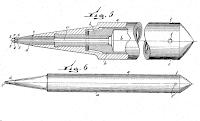
The student also mentioned a few negatives. One of the main disadvantages the speaker talked about was that the ballpoint pen, as convenient as it is over the fountain pens, does not always provide the most silky writing experience. The ink sometimes appears to be a bit dry, especially when the pen is nearly out, so the writing is not as smooth as with a fountain pen or gel pen. I never thought much about this issue, but it made me wonder if the design of ballpoint pens is not always such that there can be a silky smooth writing experience. Another point the speaker mentioned was that the ballpoint pen requires more pressure when you write, especially on certain types of paper.

This can be irritating when you are writing fast or for long periods of time as it tends to strain your hand. I think we've all experienced that when the pen is scribbling on the page, and it's discovered that this is because of the way the ink comes out. It was interesting to hear that this was one of the early problems with the design, though something that reduced in frequency over time as pens improved in quality. 

Friday, February 14, 2025

EOTO: The Evolution of Bluetooth

History


Bluetooth was invented in 1994. Dr. Jaap Haartsen, a Dutch engineer, was given a task to find short range radio connections. The Sweden based company that he was working at, Ericsson's Mobile Terminal Division, wanted to find a way to enrich the functionality of mobile phones which at the time had been growing in popularity.Ericsson strived to enhance the capabilities of these new mobile devices by somehow enabling them to connect wireless to a range of accessories, such as, headphones, keyboards, and mice.

Dr. Haartsen's task led to the idea that if he were to create a wireless standard that would allow devices from different manufactures to connect seamlessly, making mobile phones even more versatile and portable. This invention would go on to change the way we connect, communicate, and interact with electronic devices. 

The goal that Ericsson had set into place led into the development of the Bluetooth Special Interest Group (SIG) in 1998. This group was made up of companies like Nokia, IBM, Intel, and Toshiba. Finally, by 1999 the first hands-free mobile handset was launched, marking the very beginning of a new era of wireless communication

Bluetooth was named after King Harald "Bluetooth" Gormsson, a 10th century Danish king who unified Denmark and Norway, just like how Bluetooth unifies devices through wireless connection. 

Impact

There are many ways how Bluetooth has impacted our lives and continues to

1. Solved Connectivity Issues: Before bluetooth individuals have to struggle with tangled wires. Bluetooth created a society that is able to connect seamlessly with other devices such as laptops, smartphones, speakers, and headsets. Without the ability to wireless connect there would be a forever issue of tangling wires.

    2. Mobility and Portability: Since the invention of Bluetooth there are no longer tangled wires that prevent one from moving around freely. This allows us to have wearable items, such as smart watches or fitness trackers

    3.  Cross Platform Compatibility: Bluetooth over the years became a universal standard, meaning devices for different manufacturers could easily connect. This provides users the flexibility and convenience when using various electronics without the worry of compatibility issues. 

4. Continuous Innovation and Evolution: Bluetooth is always changing and evolving. It has progressively developed in order to keep pace with expanding customer requirements. It was revolutionary when Bluetooth Low Energy (BLE) emerged into the market in 2010, which allowed devices to respond with low power, thus being ideal for battery-powered devices like fitness watches, smartwatches, and Internet of Things (IoT) devices.  Bluetooth is still evolving, and with each release, range, speed, and usage expand.

Overall Idea

In actuality, Bluetooth technology has altered how we engage with the outside environment. Bluetooth has allowed people to talk to and control their gadgets in previously unimaginable ways, from resolving connectivity problems to facilitating the expansion of the Internet of Things. It is one of the most important and widely used technologies in modern life because of its portability, worldwide interoperability, and ongoing improvement. We can only imagine the new possibilities that Bluetooth's continued evolution will bring to wireless communication in the future.

Privacy

 Impact

Though the internet era has made our life so much simpler, it has also invaded our privacy. I understood how much data about us is gathered, many times without our knowledge or consent, after watching the TED talks. We are being monitored whenever we search for something, use an app, or make an online transaction. My friends and family are concerned because most of them have no idea of the possible risks. Sharing personal details on social media, for instance, may not be harmful, but businesses frequently utilize it for targeted advertisements or may resale it to third-party individuals without the knowledge of users.


Government's Role

Governments are at the core of ensuring our privacy. Because privacy legislation is outdated, businesses tend to exploit personal information without serious repercussions. There should be stricter legislation to make sure that businesses are open and forthcoming with information that they gather and utilize. People should be granted more discretion, like opting out of information gathering where feasible. Businesses would be more inclined to act responsibly if there were clear privacy policies and actual repercussions for violations.

Individual Actions to Maintain Privacy

Although there is a role for government to play, we also need to take responsibility to make sure that we are safeguarding our own personal information. We should be careful about what apps we download, and not over-sharing on social media. Those two things alone can go a long way to helping keep our personal data secure. It's really critical to from time to time check the privacy settings on our devices and be mindful of what information we're sharing. However, even with all the simple precautions it's not guaranteed that you are maintaining privacy.